This page documents my project to convert “Serenity,” my 1983 Hunter 25 to electric auxiliary. The boat was a 25′ fin-keel sloop with an outboard auxiliary. It was a shared project with my father, the multitalented musician and luthier Nick Apollonio, with him tackling most of the woodwork and restoration and me tackling most of the electro-mechanicals. The fact that the original auxiliary was an outboard made this a good COVID project that we could divide between MA and ME.
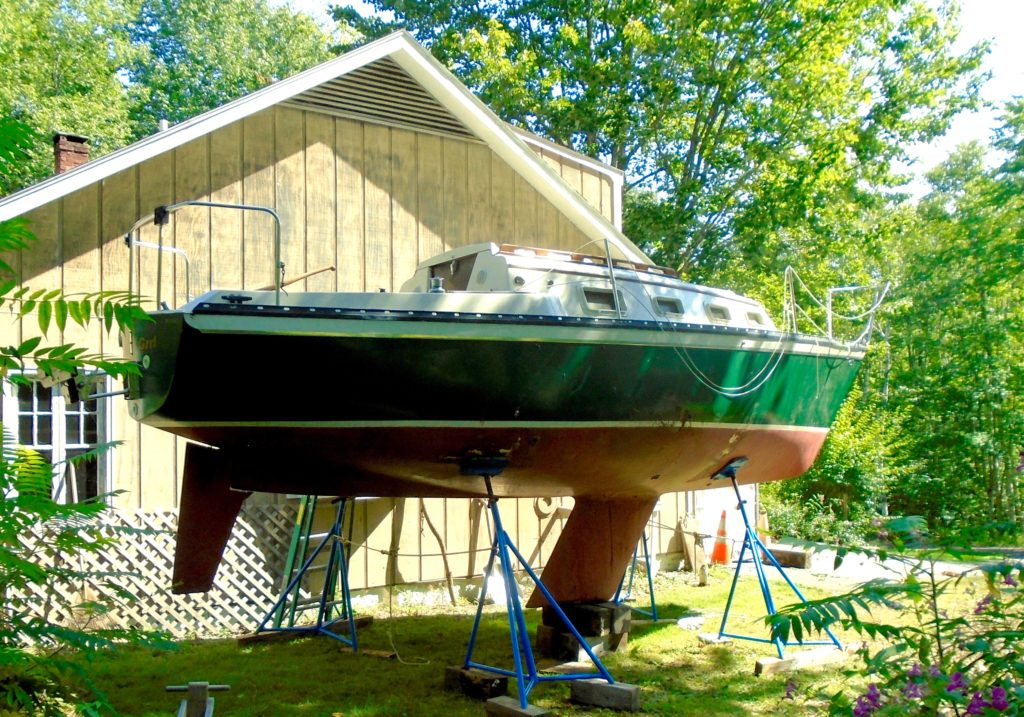
Like any sailor, I hate when I have to start up the rumbly, shaky, stinky, and sometimes finicky auxiliary. Sailing is an even more natural fit for clean, quiet electric propulsion than automotive. And with the light use the auxiliary sees on a coastal cruiser such as this one, all the propulsive power you need can be provided by the sun!
Design Goals
This boat needed to be fully solar powered. I kept her on a mooring and did not have access to shore power. I needed enough battery capacity for weekend expeditions and enough solar to charge during the week while I was away.
I wanted to ensure that I wasn’t making performance compromises – my electric outboard needed to be every bit as capable of getting me out of trouble as the stock outboard. That meant I wanted enough thrust to push the boat to hull speed.
Low cost was also a priority for this project. I was rather offended by the cost of Torqueedo and their competitors, so minimizing cost was as much a point of pride as it was budgeting. I was also in need of an outboard regardless so I was trying to keep my costs in line with what a new 9.9HP would have cost.
Design and Construction
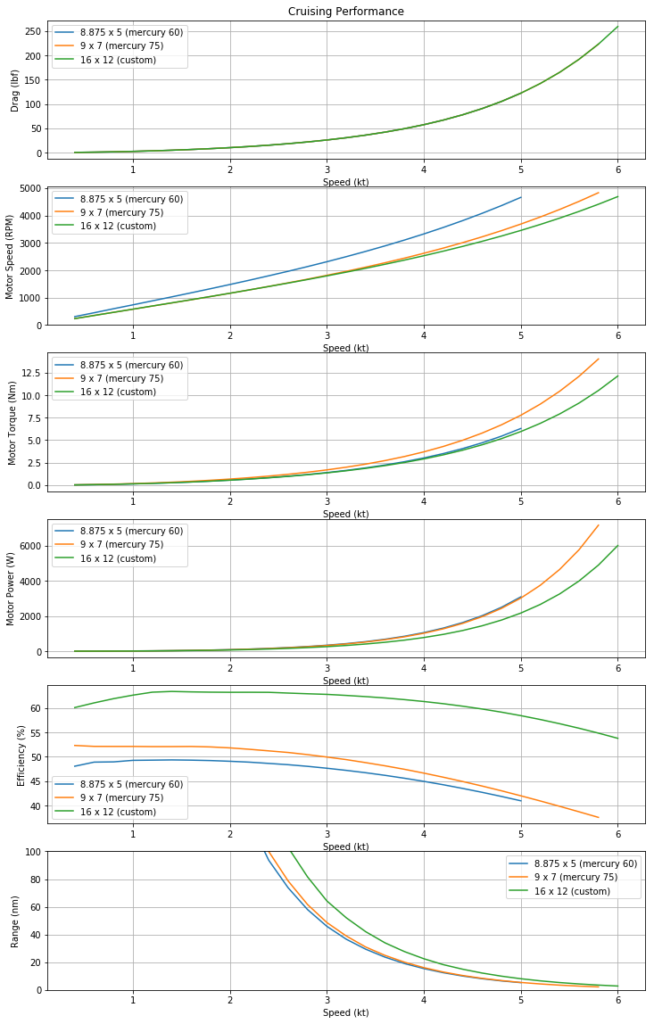
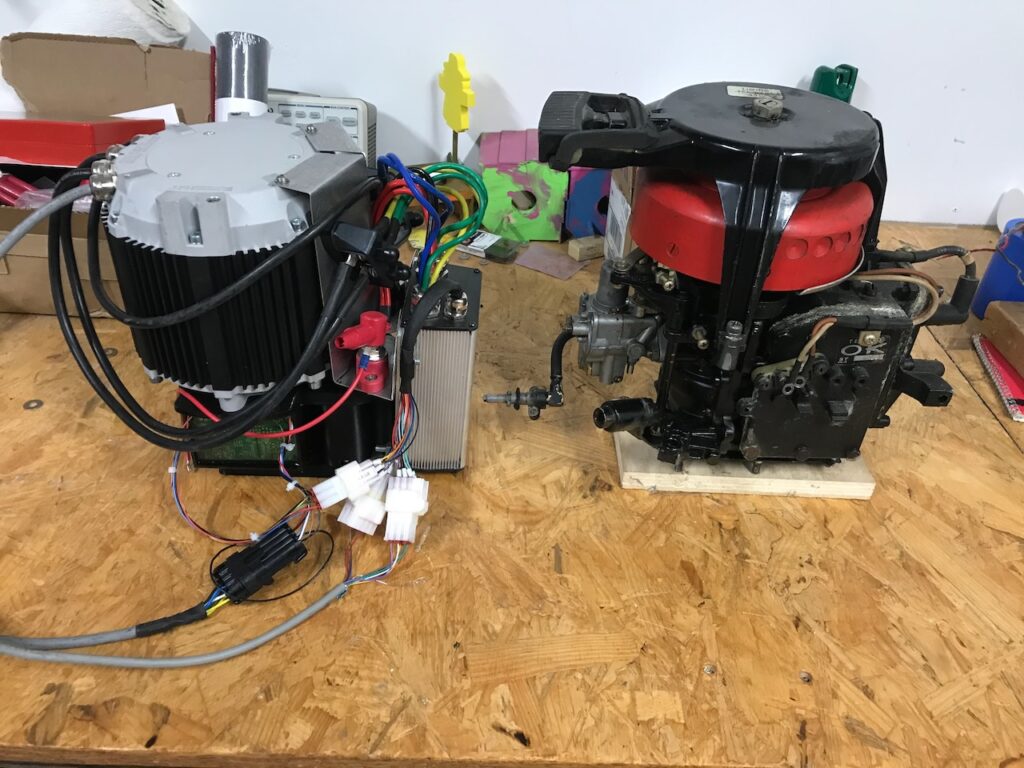
I started by attempting to model hull drag and propeller performance and settled on 6-10HP (the Hunter originally had 10). Next, I needed to know what propeller I was using, so I went outboard shopping and ended up with a 1960s Mercury 6HP whose propeller was 8 2/3″ diameter and 5″ pitch with a 2:1 gear ratio – not perfect but good enough. From this, I was able to select a Motenergy ME1718 brushless DC motor ($690) and a 72V, 100Ah battery. I decided to design for 100A max current (7.2kW is approx. 10HP) and bought a Kelly KLS7230 controller (300A peak, 120A continuous, $260). For batteries, I bought six 12V, 100Ah, deep cycle, flooded, lead acid batteries (about $140 each with core charges).
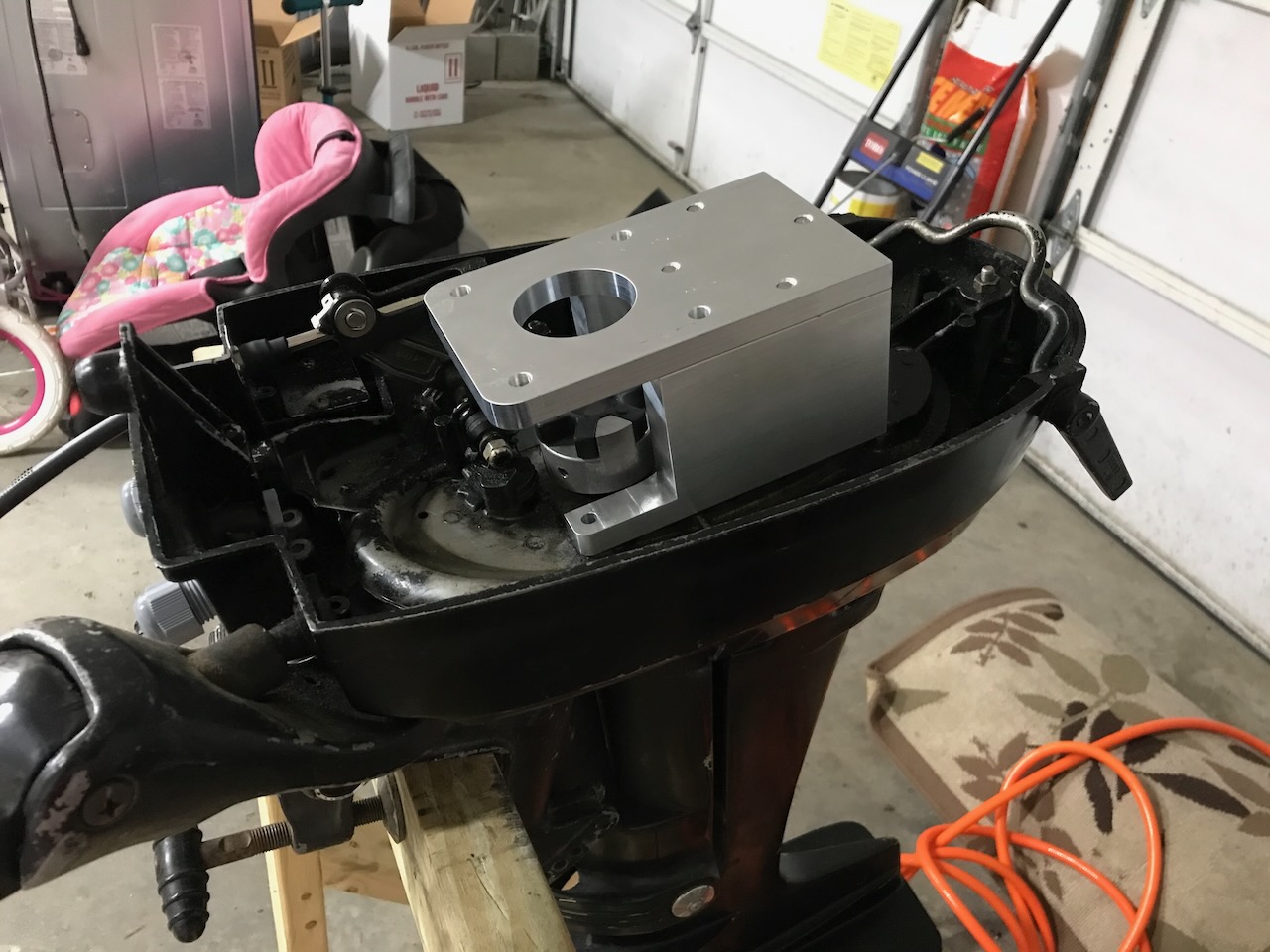
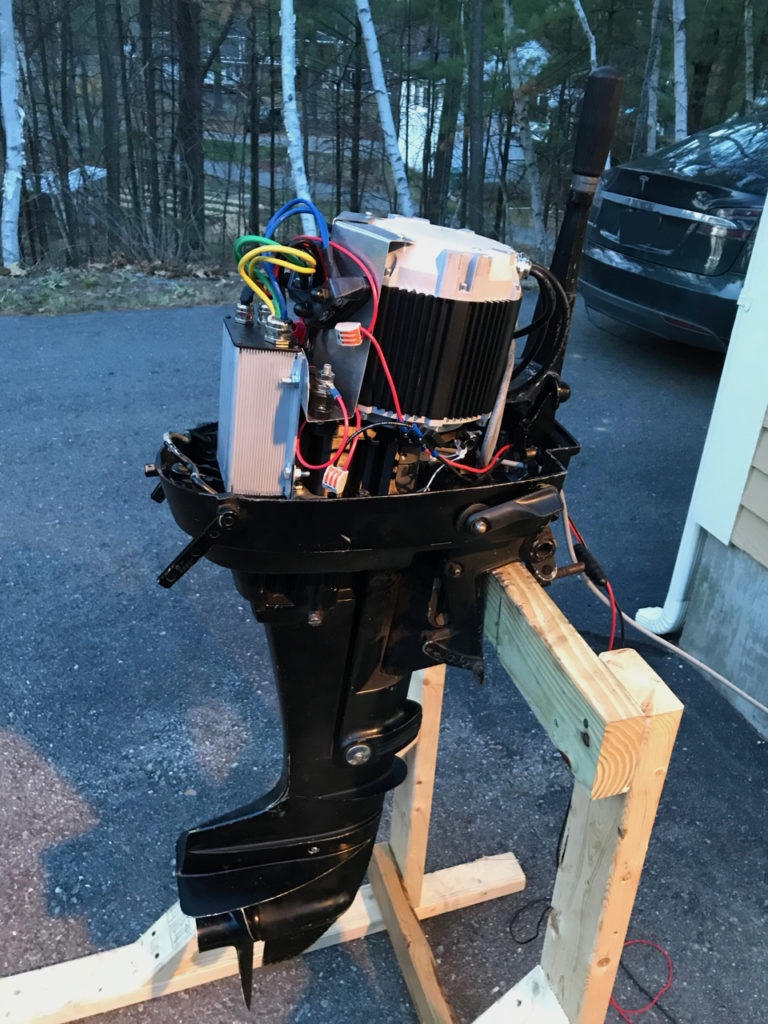
I removed the engine, measured the bolt pattern, and designed a fairly simple 2-part motor mounting bracket ($400). I used a “Lovejoy” or jaw coupling to connect the motor to the drive shaft because it’s relatively tolerant of misalignment and provides some vibration damping as well. I needed some fancy machining to broach one half of the coupling to fit the driveshaft splines, but I was able to find a local specialist who could do it ($125).
When everything was assembled, I had an electric power head that fit the original space nicely.
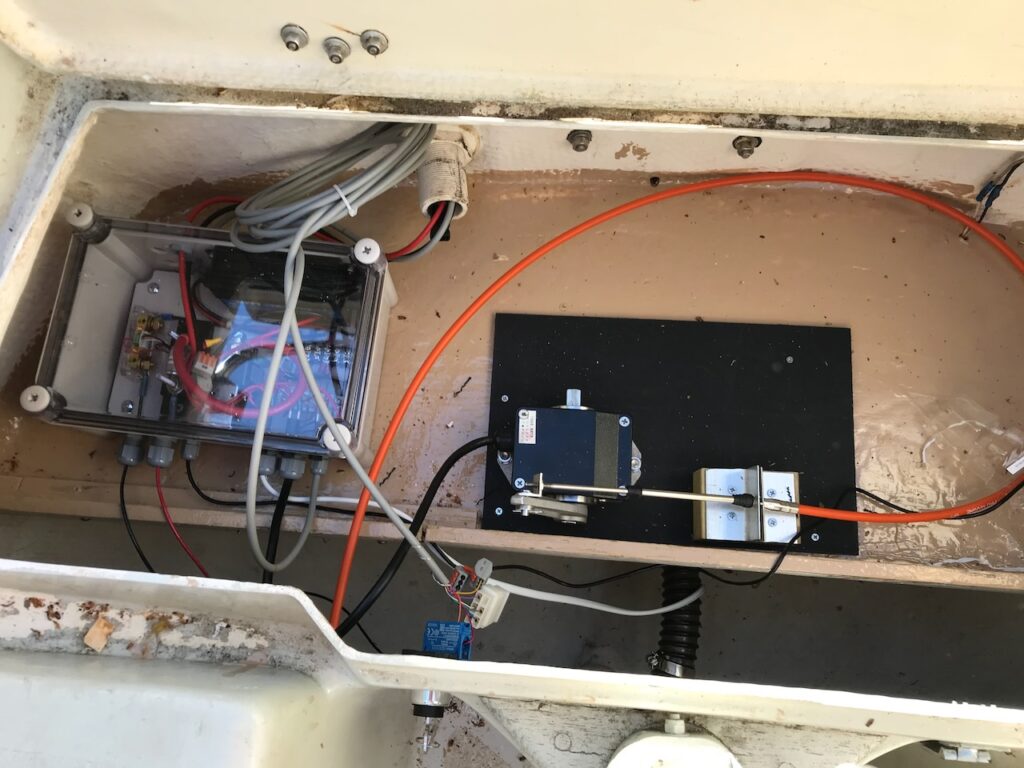
I put all the accessory wiring (shunt, fuses, contactors, throttle interface, charge controller, etc) in an IP-68 sealed box and mounted it in the aft lazarette. The picture below also shows the throttle, which was later mounted to the underside of the lazarette shelf to be out of the way.
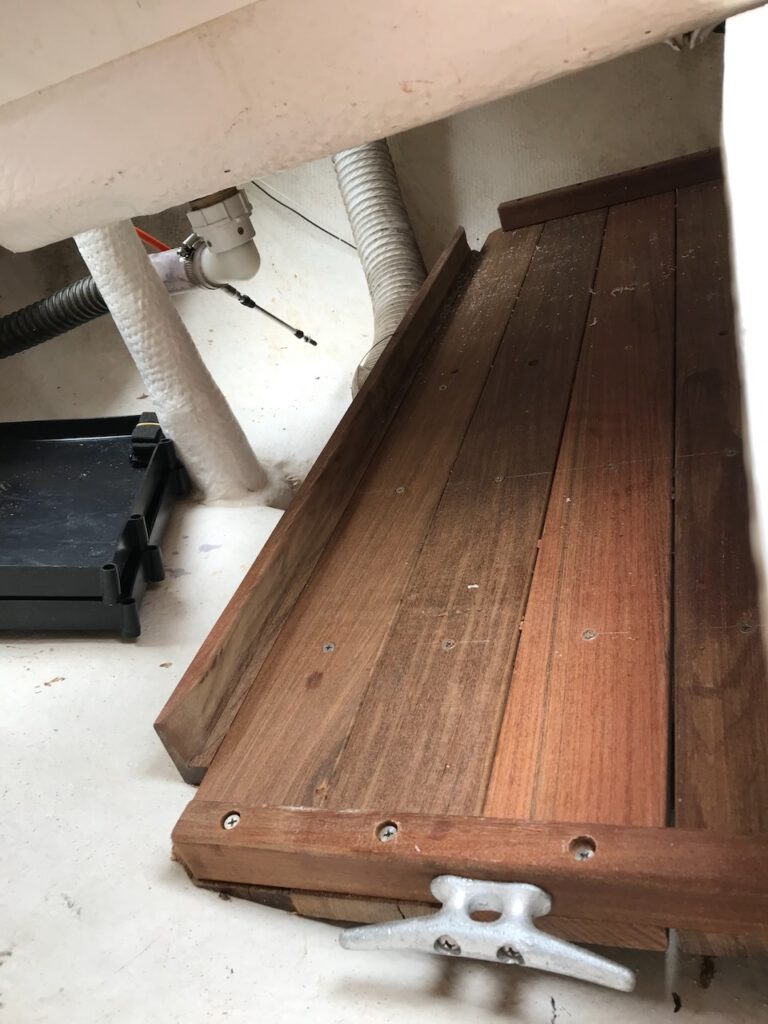
Dad built a gorgeous battery tray out of ipe. We installed them in the poorly utilized, empty space under the cockpit.
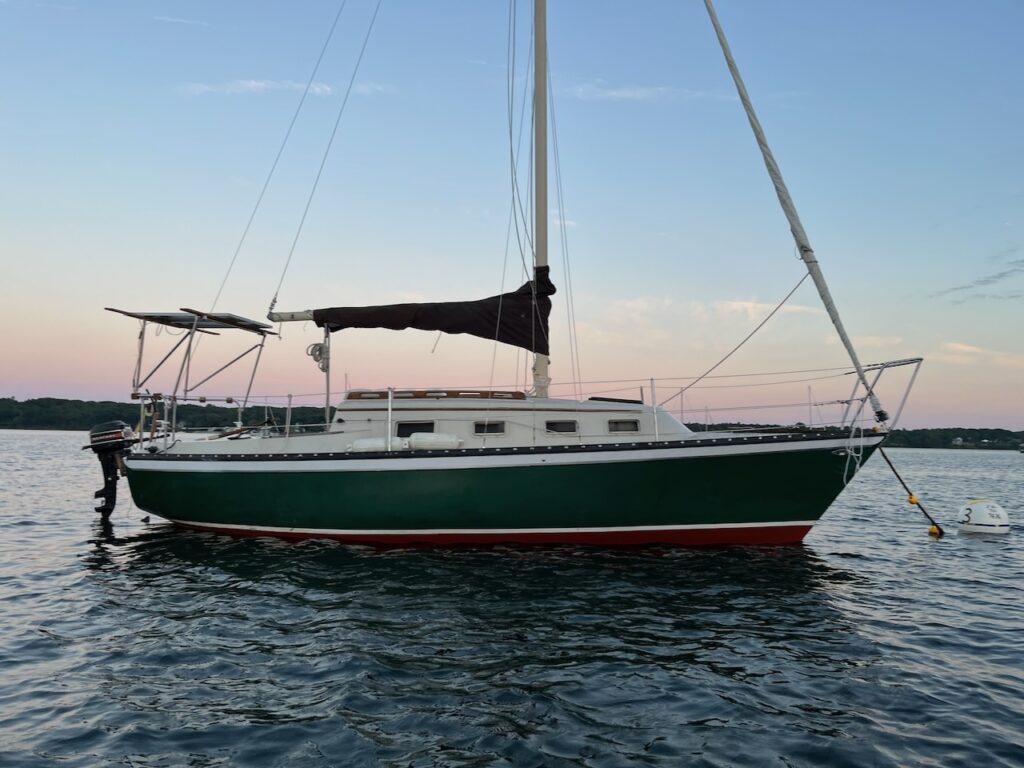
To round out the system, I bought a pair of 100W solar panels ($81 each), a cheap MPPT charge controller ($37), a 30A 72V to 12V DC-to-DC converter to run the lights and navigation ($69), and a cheap battery meter / fuel gauge ($41). The charge controller was a less common “boost” configuration needed to step voltage up from 18V to 72V. The first season, we had the solar panels mounted on the outside of the stern rails. However, they were in the way and a bit flimsy, so for the second year I built a frame to loft them above the cockpit and added a second pair of panels, bringing the total to 400W.
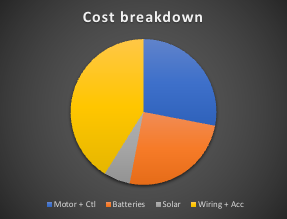
All in, I spent about $3,400, of which half was the actual drivetrain and half was all the wiring and accessories:
Performance
Performance mostly matched my models and expectations. I unfortunately don’t have good data where I wasn’t towing my dinghy, but during initial testing at launch, I did clock 6 knots on the GPS, which is hull speed. My dinghy was especially punishing to tow too, since it was a flat bottom and had a 62lb trolling motor battery in its stern.
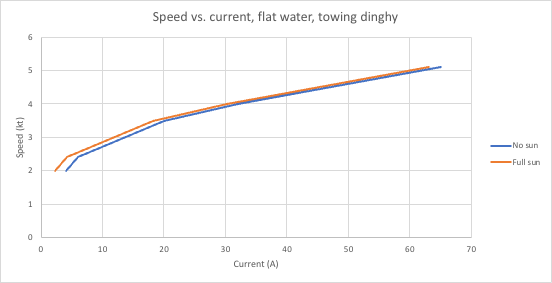
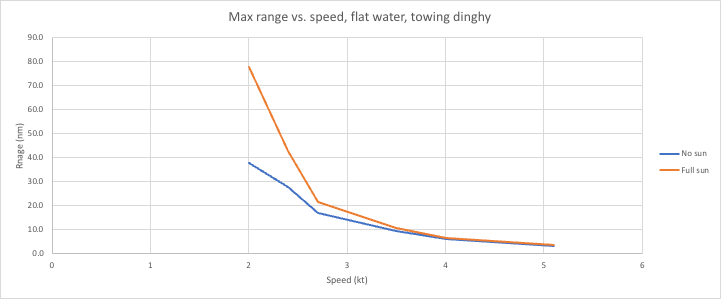
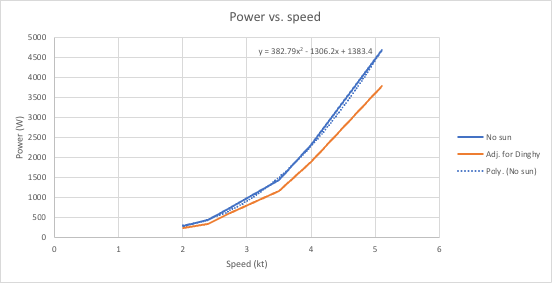
The longest trip I took was 5 days, during which time we were able to almost break even with energy usage and charging, but it was carefully managed.
Wisdom
I loved my electric auxiliary but I am not going to pretend it’s for everyone or every situation. There are definitely trade-offs to be had.
When you cruise in a sailboat with an all-electric auxiliary, you are truly sailing it. With modern auxiliaries, it’s easy to become accustomed to ignoring the wind and going where we please. Because of limited battery and charging capacity, an electric forces you to be more judicious about when and how you use that crutch. Not only do you reserve it for real need (the wind just isn’t strong enough to overcome that tidal current), but also your baseline for “this would be faster if we motored” is different. Although the motor can hit hull speed, which is important for maneuvering, it does so with a significant range penalty, so you typically won’t want to push past 3-4 knots. But nobody buys a sailboat because they’re in a hurry to get places! Relax and enjoy the journey.
On the flip side, when it’s so easy – and quiet! – to kick on the motor, it’s very easy to add a little extra push when the wind isn’t quite where you want it. Motor-sailing takes on a new dimension where you’re sailing first and motoring second. An extra knot or two with light battery drain is often a worthwhile compromise. You’re also free to practice picking up that mooring (or whatever) under sail, because the motor’s a throttle shove away if you get yourself into trouble.
Epilogue
Sadly, Serenity was stove through by a jack stand in December 2022 during a freak winter storm when her neighbor in the boat yard blew over and crushed her. She was declared a total loss, and the nature of insurance means her drive system went with her. We had many wonderful adventures in our brief two years together, and I learned much from the project that will have future applications…